Featured

Breaking the fourth wall

What happens when you break the fourth wall, in the theatre, culture, and life …?

Credit: Ashton Bingham

There’s a fantastic moment in the first episode of House of Cards when Kevin Spacey, as the Machiavellian politician Francis Underwood, on finding an injured dog in the road, turns to face the camera and says “Moments like this require someone who will act, do the unpleasant thing, the necessary thing.” The trope used throughout the series invites the audience to glimpse the psychopathic workings of Underwood’s mind, and perhaps become complicit in it. But it is particularly impactful the first time around because it creates an element of shock – we don’t expect to be addressed directly and we see, for the first time, the two sides to Underwood’s character, the difference between his public-facing and private personas. The defining theme of the series.

Credit: Vlah Dumitru

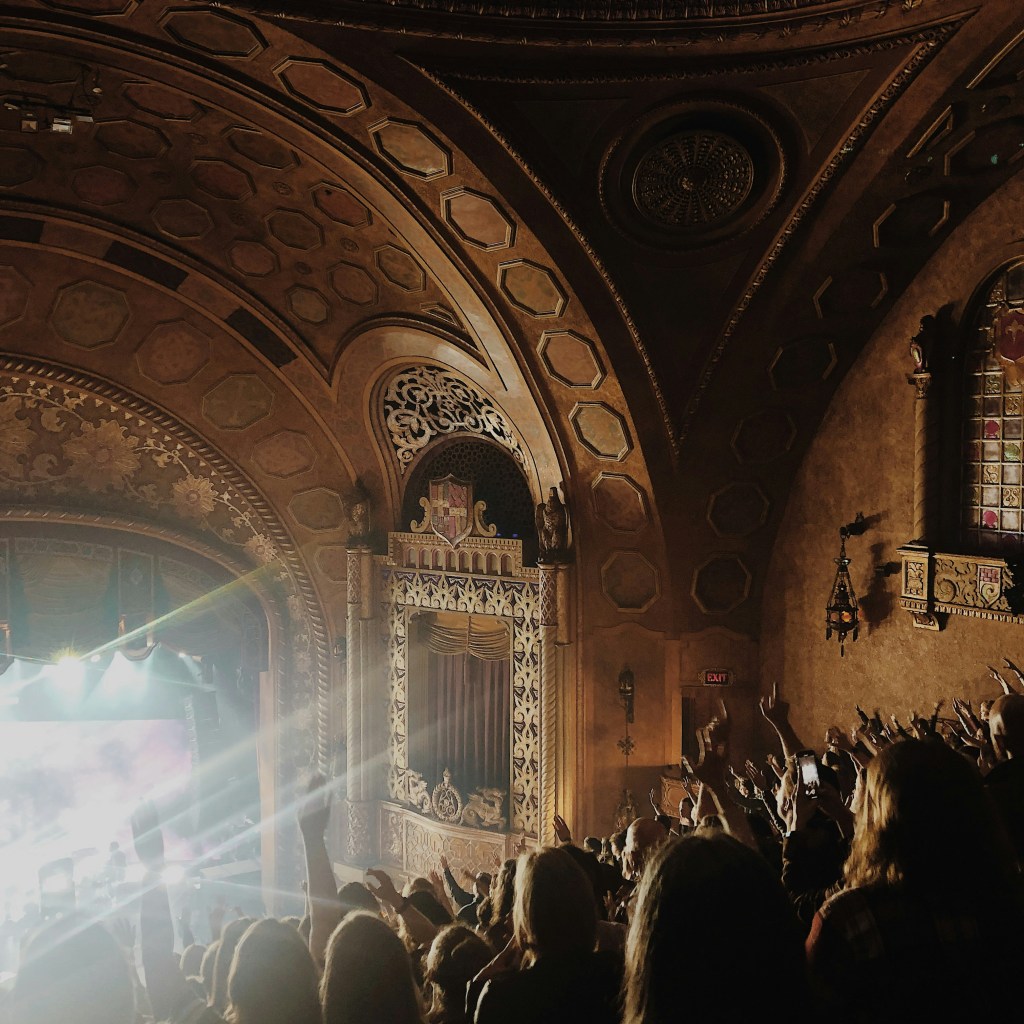
In the theatre, the traditional haven of the fourth wall – the proscenium arch between actors and audience – the fourth wall is there to help us suspend disbelief. A different world which, unlike in film and tv, cannot completely be reconstructed in a realistic way. If we, as the audience, can allow ourselves to accept the fourth wall, what is going on on the stage becomes real to us. But there are times in theatre when the fourth wall is broken. There are plenty of examples when an actor has broken the fourth wall to ask a member of the audience to turn off their mobile phone. Recently, the actor Andrew Scott noticed a member of the audience working on their laptop while he was performing in the title role of Hamlet. On these occasions, the interruption alarms the audience and jolts them back to reality. But the actor does it when they feel it is necessary to break the fourth wall. They do it to make sure the fourth wall continues to exist. The theatre needs the fourth wall so much more than tv and cinema, so it’s even more important to protect it.

Credit: Dylan Gillis

The fourth wall also exists in life, it exists in order for us to do the tasks that we need to do and for people to give us the space and respect to do that. I remember once as a young communications consultant presenting on behalf of a media literacy education charity to representatives from the beauty industry. We wanted the industry to support us so that we could produce a suite of education materials about ‘airbrushing’ (it was back in the early 2000s) and the impact that might have on young girls’ expectations of themselves. The representatives came to the meeting, but they were not up for it. I was talking about the government’s criticism of airbrushing when one lady from a very well-known global brand muttered audibly in decidedly spicey language that the government (and we) were talking out of our backsides. For a moment I was lost for words, this lady’s behaviour was so out of form for a respectable workplace meeting, and my client was sitting next to me, and this woman’s comment could very easily derail the entire strategy. Swallowing my panic, I cleared my throat and asked whether there was a problem she wanted to discuss. A painful few moments… But, if she hadn’t said anything, the elephant in the room wouldn’t have been addressed, everyone would have listened politely and then they would have gone away and we would have never heard from them again. We ended up teaming up with the beauty industry, and the airbrushing lessons were eventually rolled out in secondary schools across the UK.

(Not my friend) Credit: Priscilla du Preez

The fourth wall can be broken in a moment of  crisis, to right something that is going wrong. A friend, a successful news journalist, had moved to the UK to start up in financial PR. One day, he galvanized all his creativity to pitch a client’s non-story to a news desk (it was back in the days when we used to call them up). The journalist snapped ‘why would I even write a story about this rubbish?’. ‘I’m just doing my job, I used to be a journalist too,’ my friend replied. ‘I broke the fourth wall,’ he said to me later.  Many frustrated PRs have yearned to say the same thing, but haven’t been able to, because of the fourth wall – the rules of engagement – in the process of PR pitching. It was extremely cathartic for my friend to break that fourth wall in that moment. He was able to get rid of months of frustration, the frustration of being regarded as the lesser party by journalists, even though he had years of experience as a front line crime reporter up his sleeve. He was able to say what all PRs want to say – that we work brilliant things with our material. Sometimes that material is excellent, other times less so, but we can only work with what we have. My friend who is a very successful PR, has always had a great sense of timing. I admired his bravery in calling out the journalist for being rude.

Credit: Alex Chambers

But imagine if all PRs broke the fourth wall, all the time? No story would ever get sold. The relationship between journalist and PR would break down. And the public relations industry would be on its knees. Remember the famous ‘Ratner moment’ when CEO Gerald Ratner referred to one of the jewelry company’s products as being ‘total crap’. That comment spelt the end of his career, and the end of the business. It’s been acknowledged that this was one of the worst PR mistakes ever made.

If we were to describe what the fourth wall is, moving beyond the literal of the entertainment industry, we could say it is a not-acknowledged contract between two parties (professional, personal, institutional), that accepts that there are some rules of engagement that allow us to suspend reality to a greater or lesser extent to make that interaction work. Viewed in that way, the fourth wall is an important part of society. It is there when a politician campaigns during an election (imagine the legwork the recent Tory government had to do during the last election campaign, trying to sell new ideas and the concept of hope after fourteen years in power); it is there during online dating (when couples chat about their favourite TV shows but are in fact auditioning each other as a future life partner); it is there during the pitching process. We can’t really afford for the fourth wall to break down, but it can be fantastic to challenge it, judiciously, for impact, to shock and to change things, or even to make sure we maintain the status quo, when the moment is right.

August 2024
Featured

How to behave in public (What ballet has taught me about life)

Photo by Hannah Busing on Unsplash

On a recent Saturday night at the Royal Opera House, the audience was looking forward to the ballet Different Drummer; a serious work by one of the twentieth century’s most influential choreographers, Kenneth MacMillan. The ballet, based on the German drama Woyzeck, builds to a tense moment when the girlfriend of the main character, the tragic soldier, is lured away by another man. On this night, just when the girlfriend turned away from Woyzeck to look longingly back at her new suitor, the music was interrupted by the sound of shattering glass from the upper slips – the very furthest away seats to the top and side of the auditorium. A slow handclap was followed by scuffles and protests, as someone tried to intervene with whoever it was who was making a ruckus. The protests began quietly at first – as people started to crane irritably away from the performance to see what was going on – before getting louder and finally a scream ‘I just want to enjoy the f–king music!’, before the poor man was ushered out of the room and the drama, off stage at least, was over.

You do hear about audience behaviour taking a nosedive in the West End, but this almost never happens in ballet. It would have been a shock at any ballet performance to have the audience convention of silence broken in such a forceful and unexpected way. But coming at such a tense point in a dark and soul-wrenching ballet, the moment was heightened and the uncertainty about what might prevail was quite disconcerting – as if what was happening on and off stage were somehow weaving themselves together. After the show, the audience chatted amongst themselves in anxious voices, and tones of awe, about how shocking the outburst had been and what could have been done by Opera House management to prevent such a situation escalating. They carried on discussing it in taxis, on the tube and on online forums.  

Photo by Hulki Okan Tabak on Unsplash

The incident made me reflect that we live in a world where in public at least we are to behave in certain ways. You don’t even think about these conventions being there, until they are broken. The shock of someone breaking that convention at the ballet rippled through the audience in a tangible way, almost lending itself to a thrill. We are often told that, in Shakespeare’s day, the audience would heckle, carry on conversations and throw fruit (although they haven’t reintroduced this at the Globe..); and Edith Wharton’s accounts of high society in turn of the century Manhattan pivot around the great and the good carrying on their socialising in their expensive opera boxes while the performance was going on down on the stage. But this is not the norm or the expectation nowadays.

There are practical reasons for people to be silent, and for large groups of people to behave in a certain way so that order can prevail, and events can proceed as planned. But at the same time, the almost salacious shock at the interruption of Different Drummer suggests that these social conventions take on more than a pragmatic purpose. In 1903, a sociologist called George Simmel spoke about the ‘impulse to sociability’ where humans have an instinct to behave in a way that is socially acceptable and enables them to belong to a particular group – or society in general. It’s a concept that has often been used derogatively, for instance in inferring that people don’t think for themselves and blindly follow fashions and trends without exerting their own creativity. But actually, we all have good reasons to conform, even if it means giving up some of our individual autonomy from time to time.

Photo by Abigail Lynn on Unsplash

Non-conformity can be powerful and can used as protest to demonstrate disagreement or dissent about something that is happening. A famous example was when musician Jarvis Cocker stormed the stage of the Brit Awards in 1996 to show his disgust at Michael Jackson performing a very self-reverential song, dressed as a Christ-like figure. Cocker mounted the stage and shook his bum at the audience – hundreds of thousands of people watching the awards on live TV. Cocker got away with it, largely because many people agreed with him even though they wouldn’t have dreamt of doing it themselves, and there was something in his personality and credibility that allowed him to carry it off. Cocker presumably calculated that he had nothing to lose by getting onto the stage, and it proved to be the case, as shown by his continuing success and popularity over the next twenty years. Going further, there are occasions when groups of people actually rebel against conventional behaviour as a herd. The documentary Woodstock 99 shows a wide-scale loss of order after festival goers endured terrible conditions including the lack of food and water, unbearable heat, and ground saturated by sewage. After three days of this, the crowd erupted in a riot, destructing the temporary structure that had been set up for the festivals, setting fires, rape and pillage. The mass momentum to act like this was prompted by a breakdown in the social contract made by the festival organisers to the people who had paid to attend, in turn triggering the festival goers to forsake social norms en masse. The chaos was only brought to a close with the arrival of a large consignment of the national guard.

Van Kleef, Wanders, Stamkou and Homan is a review of research and literature around norm violation and plots out a model of factors that influence norm violation and our responses to it. They point out that minor norm violations such as leaving the remains of your lunch on the table and interrupting each other during conversations are ‘omnipresent’. They looked into the factors which make ‘rule breaking’ of this nature more likely and found two factors which influence whether people violate norms. One factor is that people are more likely to violate norms when they perceive others also break the rules – which may account for the festival goers at Woodstock rioting in response to being let down by the festival organisers. The article says that in these cases ‘societal level norms about how one ought to behave may be overruled by local norms that are constructed based on the perceived behaviour of others in one’s social environment.’  The other factor is that people who feel more powerful in a situation are more likely to break norms. In other words, Jarvis Cocker is unlikely to have stormed the stage at the Brit awards if he had been a waiter serving drinks or a member of public who just happened to have a ticket.

The third point in the article is the impact that norm violation can have on other people. The study finds that norm violations trigger feelings of anger, blame, anxiety and fear, even when no personal harm is involved. What’s more, ‘ingroup deviants’ (ie people who are part of a group or society where those norms are established) are regarded more harshly than ‘outgroup deviants’. This can explain the disgust and shock of the members of audience who, after the performance, could only discuss the behaviour of the gentleman at the ballet. Van Kleef, Wanders, Stamkou and Homan say that gossip has been found to foster norm compliance as people endorse the violation of certain norms to defend other norms that are seen as more important. The need to discuss and condemn the behaviour of that particular member of the audience was a way of reinforcing the norms of that group – ie regular attendees of the ballet – and perhaps even the bonds between members of that group as people who are committed to appreciating ballet as an art form.

May 2024