Featured

2024 in comms: who and what got us talking in a year of change?

How did 2024 change the way you think about comms? What can Keir Starmer learn from Taylor Swift, how have divisive rebrands become a thing (it wasn’t just Jaguar who took the plunge this year), and what did Nokia and Mango do to navigate the tech/ anti-tech dichotomy? Here’s what I learnt about the value of good PR and managing your brand in a year of change:

Credit: Isaac Smith

Keir Starmer struggled a little with his new identity as Prime Minister, even mistakenly referring to outgoing Tory leader Rishi Sunak as Prime Minister at the dispatch box.. But as things remain difficult at home, the PM is beginning to see that his greatest opportunity is to become a statesman. And image is everything. There’s nothing as effective as appearing alongside established premiers to underline your global leader credentials.  See him grow into the role in 2025 with more international jet setting.

Leading with diplomacy and dignity comes naturally to Taylor Swift who manages to find opportunities for altruism whilst conquering all before her. She balances the two identities of savvy business women with purveyor of all things fun and good in order to have the broadest appeal of any entertainer on the planet. Impressive, given that she is not afraid to stray into the political or call someone out if required. Her ability to navigate tricky waters is unrivalled. Who else will manage to copy the Taylor playbook in 2025?

Credit: Stephen Mease

This year we learnt that a good rebrand must cause a sensation. There will always be people who hate a sweeping change (especially one that plays into the fear of Millennials and Gen X that relevancy is slipping away from them) but controversy should be welcomed as it yields dozens of column inches and weeks of discussion on LinkedIn. Rebrands are necessary in a changing world as Jaguar and the Royal Ballet and Opera (formally Royal Opera House) showed us this year, abandoning their heritage and modernising their look and feel to keep up with markets. As their new looks become established and accepted, watch out for more brands taking the plunge in 2025.

The tech/ anti-tech dichotomy continues as big companies compete in the AI arms race but struggle to placate concerned parents taking smart phones away from their children. Whilst humanity struggles with the hows and wherefores, some brands are making the most of it, including Mango who revealed their first AI ads and Puma who introduced their AI ambassador.. On the other hand, 11 year olds took dumb phones to school (which Nokia is very happy about) and CDs finally made a comeback. I even hear HMV is reappearing on our High streets. Nevertheless, there is still a thirst for someone to step in to lay down some guidelines. All eyes are on Australia who introduced a social media ban for under 16s. Look out for campaigners and governments wrestling with this in 2025.

December 2024

Featured

Don’t shoot the messenger!

Finally a podcast that gives PRs a voice

Credit: Juja Han

I never fail to get a feeling of joy on Tuesdays when I listen to the weekly instalment of When It Hits the Fan. A podcast fronted by two titans of media and PR: David Yelland, former editor of the Sun, and Simon Lewis, a Chief of Comms to the late Queen and Prime Minister Gordon Brown amongst many other incredible roles. Here is a podcast that speaks directly to me. A delicious treat as my train rushes through South London on cold dark mornings.

As a care-worn PR of twenty long years, I am used to the idea that PR has no voice of its own. We are vessels of other people’s information, our job is to come up with the most resonant and evocative way to present it… But it’s far more complicated than that. Diplomacy, people management and navigating internal (and external) politics are the true skills you need to bring to the job. It’s part of the thrill, of course, which keeps us in the game, but you can’t really speak about these things.  All that stuff needs to be kept firmly under the bonnet.

Credit: Viktor Forgacs

Until David and Simon (yes, I’m going to use their first names) entered my life, I’d never come across people talking openly about the good, the bad and the ugly of all PRs do. And it is fascinating: why people say things when they say it, how they pull levers of power to achieve their goals, the unintended consequences when they mess up..the sheer randomness of why things happen, even in No 10, at national newspapers…when the best people in the business are making the decisions. Recent episodes have covered the political role of Elon Musk and X; the battle for the Chancellor of Oxford – and why that’s a big deal; the most disastrous PR failures and how to come back from them; why Jaguar know what they’re doing.. and the power and mastery of ‘bikeshed PR’. And of course the ins and outs of the Murdoch dynasty, a mind-boggling story unfolding right now. Their experience and insights are fascinating and endlessly entertaining. It is a delight to learn from their wisdom, and I feel a strong sense of recognition too.

Credit: Thomas Charters

When It Hits the Fan avoids the pitfall that some comms commentary falls into. It’s so easy to come across as too virtuous, or navel gazing, or with a forced earnestness that gives the impression you’re trying to justify being a PR. (By the way, I’m sure I’m guilty of this all the time.) David and Simon manage to bring their massively fascinating experience to the conversation in a brilliantly entertaining way, along with insight into the big personalities at the heart of comms and the press, and the reality that it’s not all a basket of roses.

If you’ve not discovered it yet, give it a listen.

December 2024

Featured

What can we gain from the blame game?

The pros and cons of blame in PR, politics and business

Image by Pexels from Pixabay

It wasn’t the result the Democrats were expecting, but there was no denying on Wednesday morning the Republicans were sweeping to a very comfortable majority in the US election. It wasn’t long before various Democratic sources including Nancy Pelosi were attributing the Democrats’ loss to Biden being both ‘selfish’ and ‘stupid’ for not handing over the reins earlier.

Photo by Jon Tyson on Unsplash

It is true that three months is hardly enough time for a person to establish themselves as a contender in a race that their opponent has been fighting for four years. And that Biden should have known that he was not a credible candidate under the glare of pre-election scrutiny. All the same, it seems hard to blame him completely for not making the decision sooner. It was a leap for the Democrats to make. Despite her rapturous welcome when she was eventually endorsed, Harris had polled low during Biden’s presidential term, and the party had sometimes blamed her for those policies that had failed to gain traction. The truth of what actually happened – a complicated mess, a society that is fearful of the outside world, the lack of enthusiasm for a female candidate, Trump being a strong leader, despite his shortcomings, and, yes, culpability by some individuals for sure – is messy. It is difficult for the Democratic party to confront. So, in the cold light of day, blaming Biden is easier, and perhaps cathartic for them.

The Democrats are hardly alone in playing the blame game. Blame has been slung around in all quarters these last few weeks. Like the mud slung at the King of Spain when he went to visit the victims of the Valencia floods, one of those tragedies where blame and anger, as Henry Mance writing in the FT points out, is a normal and important process of grief, but can also prevent us from learning from awful events and how to handle them.

Rachel Reeves played the blame game with panache and political style during her first Budget speech at the House of Commons dispatch box the other week. It is typical of an incoming government to blame their predecessors for the state of the nation as they found it, and there are a lot of things the Tories are to blame for, for sure. Here, Reeves used the blame game to temper what was, according to many commentators, the most painful Budget in years. She did it in the anticipation that many of the measures would be hard for the public to swallow.

So, blame is all around and, in many senses, it is a natural part of life. Not only is it part of our fight or flight reflexes according to Dr Bernard Golden, writing in Psychology Today, to preserve our sense of self-esteem, but it is also how the media dissect and analyse world events (and sell papers, if you’re being cynical). Dr Golden says that blame has become a type of global thinking. And surely this is partly down to the globalisation of information, ways of thinking and perspectives spreading quickly from person to person and country to country in a matter of days and hours after something has happened. But he also argues that blaming others can be personally disempowering, denying yourself agency and the ability to grow. I would argue that, equally, the public inclination to apportion blame prevents society from truly examining itself, having open and difficult conversations in order to iron out collective mistakes.

But just as we shouldn’t always blame others, we need to have the strength, when necessary, to accept blame ourselves. If an organisation is going through a crisis, the executive team at the centre of the storm is often tempted to explain why they are not to blame or to deflect blame onto someone else. Sometimes this has ruinous consequences. Boeing were criticised by the National Transportation Safety Board for failing to disclose who carried out work on a door that blew off mid-flight. The omission led to an escalating scandal and ultimately the resignation of the company’s CEO and Chair. Actually, crises are dealt with most successfully when an organisation can acknowledge culpability, face up promptly and proactively to internal faults, and have the courage and strength of will to address them. The incoming Starbucks CEO played into this tactic when he acknowledged that the business had moved too far away from coffee and pledged to steer it back to its roots, a move that has been described as bringing clarity and decisiveness and which boosted shares by 24%. 

November 2024

Featured

Read all about it (are we watching the death of news?)

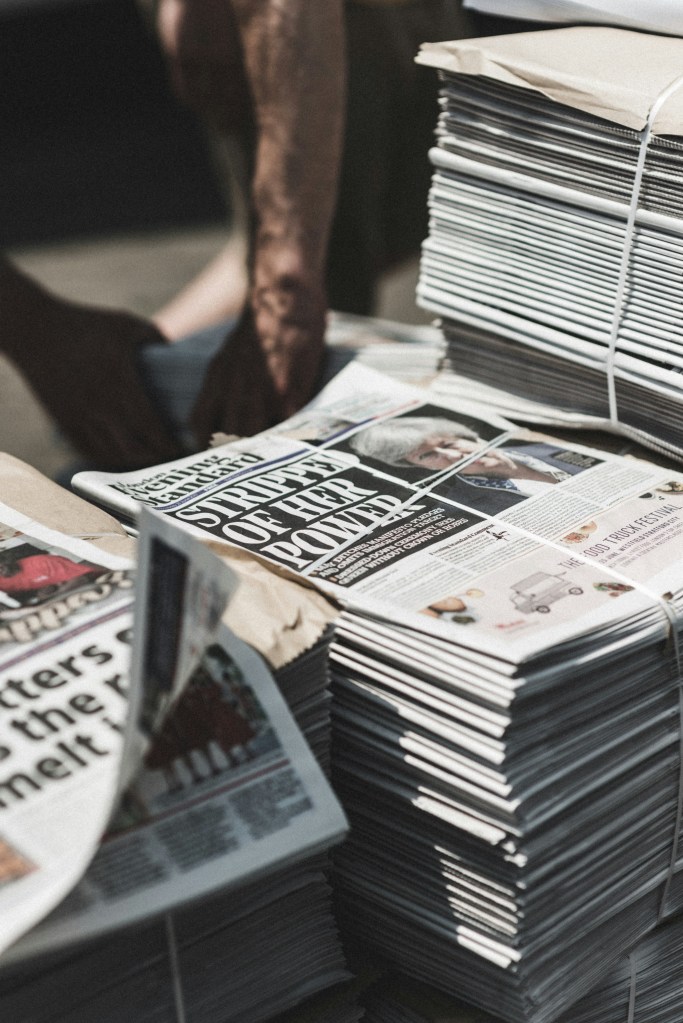
The end of the daily print of the Evening Standard felt like a particularly savage cultural blow in the life of London. Many of my early memories of working in politics involve scanning the early edition of the Standard when I popped out for lunch to get a feel for the news agenda, and a sense of direction of events in the Commons. The sound of ‘Standard!’ yelled by news sellers as we plunged down into tube stations at the end of the day gave me the thrill of feeling that I was at once grown-up and a real Londoner. And yet…there was a sense of inevitability about this summers’ announcement, and the feeling that other major papers cant be far behind.

Credit: Fujiphilm

But, whilst print is probably dying, reports of the death of news itself is  premature. We’ve heard that ‘everyone being a journalist’ means that sources go unproven, political agenda sways the news narrative, and the sheer unaffordability of maintaining a news outlet has seen hundreds of journalists forced from their jobs. Whilst, this is definitely true in some respects, in others, news consumption seems to be as all consuming as ever. How many people open the BBC news app as soon as they wake up? Flick open the Apple News app, the Daily Mail sidebar of shame? Soak up world events as they scroll through Facebook, X and TikTok or (old school!) make their breakfast with the morning news on in the background on tv or radio. The Evening Standard itself lives on strongly through its online presence, and a weekly print as the London Standard, and still provides a unique insight and perspective on what’s going on in the Capital.

Credit: Toa Heftiba

Papers littering the train by 7pm every evening was the norm twenty years ago. Now, with the rise of smart phones, the world is always in our pocket and it is served up in click-bailable sound bites to compete with everything else demanding our attention in the world of social media. But it isn’t just that. During a job where I had to read and summarise every editorial for my boss, I realised that the least annoying, most balanced and most enlighting was the Financial Times. My love for this insightful, eclectic, international paper has remained strong, and convinces me that long form, in-depth, investigative news is still resonant and powerful at the top of the news food chain. Indeed, the Financial Times recently exceeded £500m in revenue for the first time – it is going strong. And long may that continue.

Five or ten years ago, Twitter was a really useful medium for picking up news, journalists would go on the platform to break a story, and you’d also have early sight of tip offs – particularly about what was happening in Westminster. As a public affairs consultant, it allowed me to call up my clients and say ‘I understand there’s going to be a reshuffle this afternoon’ or ‘the Prime Minister may make a statement’ as soon as the rumours started up in the press gallery. There was a synergy between what was seen on Twitter and the solid reliable, well-informed news that would be read in newspapers the next day. But the death knell for that era sounded in the echo chamber of the EU referendum and, since Twitter has changed to X, the algorithm spits out useless and frustrating garbage – to me anyway.  From a news perspective, there isn’t a platform that has really managed to reproduce Twitter in its golden era, and perhaps that is perhaps more of a threat to news integrity than the demise of print.

October 2024